The Call of Cthulhu / Зов Ктулху читать онлайн
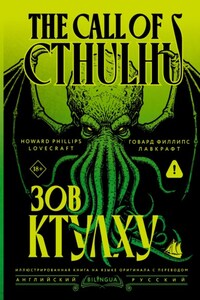
Автор: Говард Лавкрафт
Жанр:
Издано в 2026 году.
Номер издания: 978-5-17-185186-6.
Серия: Bilingua подарочная: иллюстрированная книга на языке оригинала с переводом
Человечество привыкло считать себя хозяином мира, а разум – надёжной защитой от страха. Но что, если история Земли началась задолго до появления людей? Что, если в глубинах океана, среди ледяных гор и под руинами древних городов сохранились следы существ, само существование которых способно разрушить привычное представление о мире?
В настоящий сборник вошли знаменитые произведения Говарда Филлипса Лавкрафта: «Зов Ктулху», «Дагон», «Безымянный город», «Данвичский ужас» и «Хребты Безумия». Древние культы и забытые божества, загадочные руины и следы исчезнувших цивилизаций, необъяснимые находки и существа, неподвластные человеческому пониманию, становятся частью мира, где любопытство способно привести к открытиям, о которых лучше было никогда не знать.
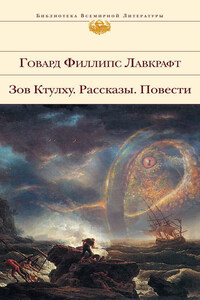
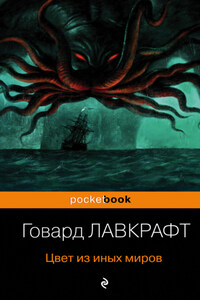
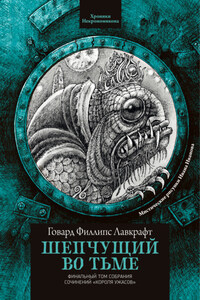
В настоящем издании представлены полные тексты произведений на английском и русском языках, что позволяет не только погрузиться в тревожную атмосферу прозы Лавкрафта, но и сопоставить перевод с оригиналом, почувствовать особенности авторского языка и проследить, как создаётся его неповторимый мир. На страницах книги также можно увидеть работы Одилона Редона и Хью Рэнкина, а также другие иллюстрации, перекликающиеся с образами и мотивами Лавкрафта и визуально раскрывающие мрачный мир его историй.
Книга будет интересна как поклонникам классической литературы ужасов, так и тем, кто только начинает знакомство с творчеством Говарда Филлипса Лавкрафта. Это издание может стать ценным дополнением личной библиотеки и достойным подарком для ценителей мрачных тайн, древних цивилизаций и историй, после которых привычный мир уже не кажется таким безопасным.
Подарочное оформление, твердый переплет, белая бумага, иллюстрации, красивый макет и лента ляссе добавляют книге изысканность и привлекательность. Ее можно приобрести не только для своей коллекции, но и в качестве подарка дорогим и близким людям.
Говард Лавкрафт - The Call of Cthulhu / Зов Ктулху
© Перевод. Д. Афиногенов, 2016
© Перевод. О. Колесников, 2016
© Перевод. Ю. Соколов, 2016
© Перевод. Е. Любимова, наследники, 2016
© ООО «Издательство АСТ», 2026

Howard Phillips Lovecraft
The Call of Cthulhu

The Call of Cthulhu
“Of such great powers or beings there may be conceivably a survival… a survival of a hugely remote period when… consciousness was manifested, perhaps, in shapes and forms long since withdrawn before the tide of advancing humanity… forms of which poetry and legend alone have caught a flying memory and called them gods, monsters, mythical beings of all sorts and kinds…”
– Algernon Blackwood.
I. The Horror in Clay
The most merciful thing in the world, I think, is the inability of the human mind to correlate all its contents. We live on a placid island of ignorance in the midst of black seas of infinity, and it was not meant that we should voyage far. The sciences, each straining in its own direction, have hitherto harmed us little; but some day the piecing together of dissociated knowledge will open up such terrifying vistas of reality, and of our frightful position therein, that we shall either go mad from the revelation or flee from the deadly light into the peace and safety of a new dark age.
Theosophists have guessed at the awesome grandeur of the cosmic cycle wherein our world and human race form transient incidents. They have hinted at strange survivals in terms which would freeze the blood if not masked by a bland optimism. But it is not from them that there came the single glimpse of forbidden eons which chills me when I think of it and maddens me when I dream of it. That glimpse, like all dread glimpses of truth, flashed out from an accidental piecing together of separated things – in this case an old newspaper item and the notes of a dead professor. I hope that no one else will accomplish this piecing out; certainly, if I live, I shall never knowingly supply a link in so hideous a chain. I think that the professor, too, intended to keep silent regarding the part he knew, and that he would have destroyed his notes had not sudden death seized him.
My knowledge of the thing began in the winter of 1926–27 with the death of my grand-uncle, George Gammell Angell, Professor Emeritus of Semitic languages in Brown University, Providence, Rhode Island. Professor Angell was widely known as an authority on ancient inscriptions, and had frequently been resorted to by the heads of prominent museums; so that his passing at the age of ninety-two may be recalled by many. Locally, interest was intensified by the obscurity of the cause of death. The professor had been stricken whilst returning from the Newport boat; falling suddenly, as witnesses said, after having been jostled by a nautical-looking negro who had come from one of the queer dark courts on the precipitous hillside which formed a short cut from the waterfront to the deceased's home in Williams Street. Physicians were unable to find any visible disorder, but concluded after perplexed debate that some obscure lesion of the heart, induced by the brisk ascent of so steep a hill by so elderly a man, was responsible for the end. At the time I saw no reason to dissent from this dictum, but latterly I am inclined to wonder – and more than wonder.